
Subliminal: Why Mbiye Kasonga Always Thinks Above-Platform
"You have to be above-platform if you're going to be successful on the Internet."

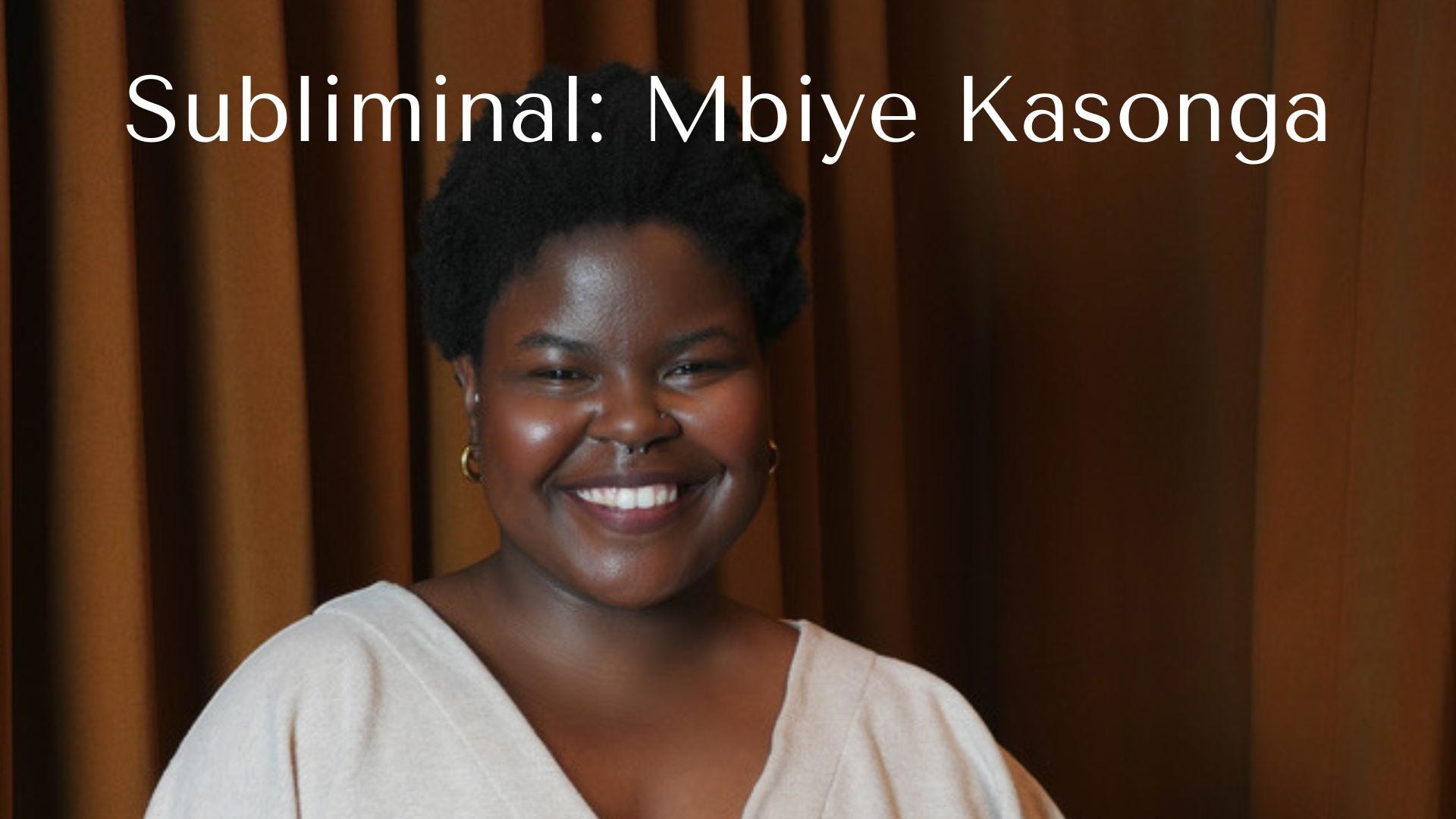
In the Subliminal interview series, artists, creatives and makers of every discipline share thoughts that have drilled a hole in their drafts folder or been tumbling around in their brains, sometimes without them even knowing. The messy pivots, unspoken rules and quiet revolutions. The triumphs and the trip-ups. The no-easy-answers-type questions that are still worth asking. No throwing subs here. The place to say it with your chest.
“The kids can’t read or write.”
“Attention spans are too short for reading now.”
Well, Mbiye Kasonga has some thoughts about that. When she’s not winning awards and shaping the culture as a marketing-minded podcast producer on shows like Naked Beauty and R29 Unbothered, Kasonga is a voracious reader who tries to spread the joy of this pastime to everyone she knows. As the host of two book podcasts , Unbound and Sylly with Tembe Denton-Hurst, and a reading series called B.Y.O.B (Bring Your Own Book), Mbiye is working overtime to make sure anyone around her can become a bookworm.
As the media landscape continues to crunch and contort itself, I tapped in with Kasonga for her dispatch on the liminal space she occupies within it. Plus, hear what she thinks the future holds for lovers of both long form audio and the written word. You’re not gonna wanna TL:DR this one.
This interview has been edited for length and clarity.
Madden: You are a woman who wears so many hats and you add so much to the world of podcasting, also the culture of reading, that’s especially what I want to talk to you about in this era of anti-intellectualism. Right now, reading rates among Americans are dropping. We’re in the middle of a misinformation storm. Trust in the media was just reported to be at an all-time low, according to Gallup polling, and a lot of that is being churned by the political powers that want to keep us dumb and in the dark. How does this in-between time for you feel as someone who’s an avid reader, podcaster and thinker?
Kasonga: So, I’m an immigrant. I was born in the Democratic Republic of Congo, so English is not my first language. My first language is French and I learned English through English as a Second Language classes. I was already an avid reader before I came to the States, I became an even bigger reader in my pursuit of mastery of the English language.
I remember I knew all the lyrics to a Missy Elliott video…this was 2002. I don’t even remember, but I remember Missy being just… She was Black, she was dark-skinned, she was chubby and I felt like I was dark-skinned and chubby, and I just thought she was everything. So I was memorizing the lyrics to her songs, but I couldn’t really speak English yet. My aunt and uncle were like, “Pack it up! No more VH1 and BET. We gotta start reading some books!”
There was a challenge in my household where it was pretty much at the time, I was reading very slim picture books, small novels, and it was like, “OK, by the time we come home from work, I want you to have read one of these books and you tell me what it’s about.” So, there was a lot of that, and then there was me going to school, having great teachers who emphasize the importance of reading. But I also remember being in fourth grade and reading aloud in class and getting to this word Arkansas and reading it as “our Kansas” because I was hooked on phonics, and it’s right if you’re hooked on phonics. But everybody laughed at me, I was determined to not have that happen again.
Madden: So, how do you feel about the growing sentiment that nobody reads anymore?
Kasonga: It’s true. It’s just true. And the fact of the matter is, book sales are propped up by a small portion of people who are buying. We can’t even really say that they’re reading those books, necessarily, but they’re buying books. We know based on library card data of how many people are in a city and how many people have a library card that people are not reading, and especially in a world where I am simultaneously making podcasts and I’m in this new entertainment landscape, I see it on multiple levels. I think what’s sad for me is I love to read, and it is the bedrock of my curiosity, and I think it’s the bedrock of my intelligence, because what I realized is that exercise of “Read the book, tell me what it was about and get it right” … reading to comprehend. That action of reading comprehension, that’s it, that’s life.
Everyone’s like, ‘Oh, there’s no manual, there’s no manual.” No, you can’t read! If you can read, there is a manual. There’s value to extract in a million different places, and we live in such an information-rich version of the world. Like, this is the most information-rich we have been in terms of just access. I think about this with music too. The fact that I can in one day listen to music from the 20s, the 30s, the 40s, the 50s, the 60s, 70s just by Googling. Nobody else has had this kind of access. But if you can’t start with that foundational capability of being able to read and understand what you’re reading, everything probably feels like a conspiracy theory. It becomes very, very easy to be paranoid when it’s hard to actually understand what’s happening in front of you.
People are talking a lot about AI right now. OK, great. We love AI, but if you cannot read, can you prompt? Can you really reliably prompt? Obviously there is an anti-AI sentiment, but I think actually people are really on the uptick, and they’re generally using it. But it’s also funny because I’m like, y’all were always typing questions into the Google search bar. You never knew what a Boolean query was, and so now AI is here, and you’re like, “This is amazing!” I feel like without that foundational sort of higher level, higher order thinking, everything else falls apart, which is why not reading is an emergency. And it’s why I am dedicated to, definitely in my personal life, but I guess, more widely in the last couple of years, just being like, “Reading should be a really non-threatening thing.” I think a lot of people stop reading as soon as they are their own librarian because there’s nobody dictating what to read, how to read, that they’re going to be tested on it, and everyone just kind of is like, okay, cool, this is it, and it’s like, no, that’s actually the point at which you get to take the reins, and you can read whatever you want.
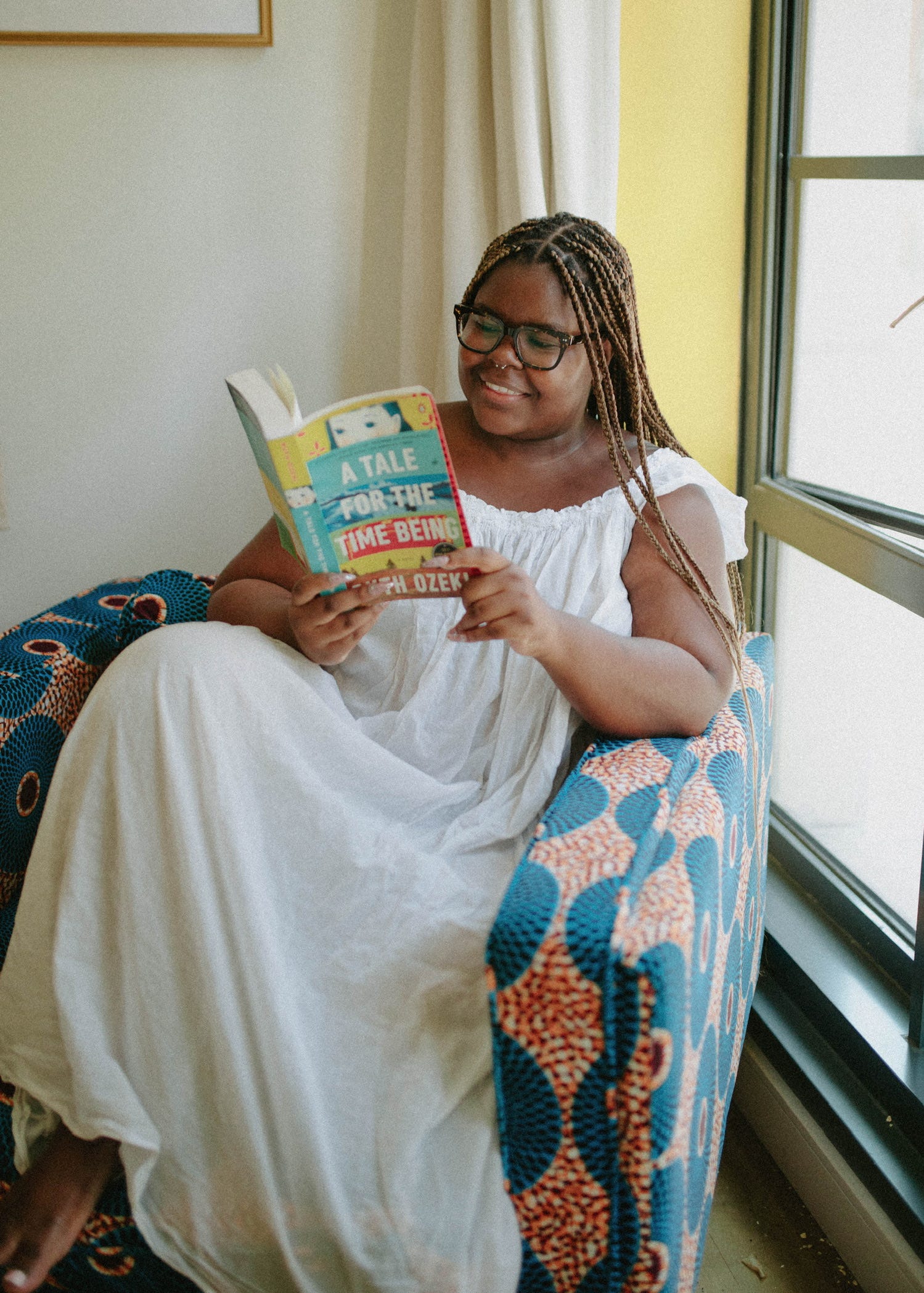
Madden: In the last couple years, you have also built out a community around it. Tell me about your Bring Your Own Book initiative. Tell me the back story, how you thought of it, and where it’s at now.
